Infrared electrical inspections
Nearly everything gets hot before it fails.
Detect system overloads, loose defective components and damaged switchgear. Infrared electrical testing finds hot, dangerous problems quickly.
- Level II certified thermographers
- 24 years in business
- $5M general liability
- Nationwide & international service
Find it before it fails
Infrared electrical inspections find hot spots caused by defects in connections and components. Infrared thermography is used to find areas of excess heat (caused by increased resistance) so that problems can be corrected before a component fails, causing damage to the component, creating safety hazards and productivity loss.
Because increased heating is a sign of failure, infrared is the best diagnostic tool available for finding these hot connections in the early stages of degeneration. This is why your insurance company may have asked for an electrical infrared inspection, to find and prevent problems before they cause damage to your personnel, equipment and facility.
And because infrared thermography testing is non-contact and nondestructive testing (NDT), there is no need to interrupt system production. Our experienced thermographers at Louisiana Infrared inspect your electrical equipment under normal loads and operating conditions.
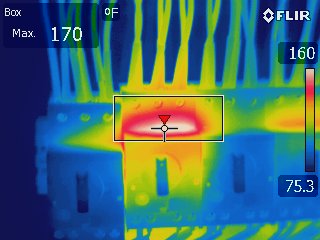 Infrared
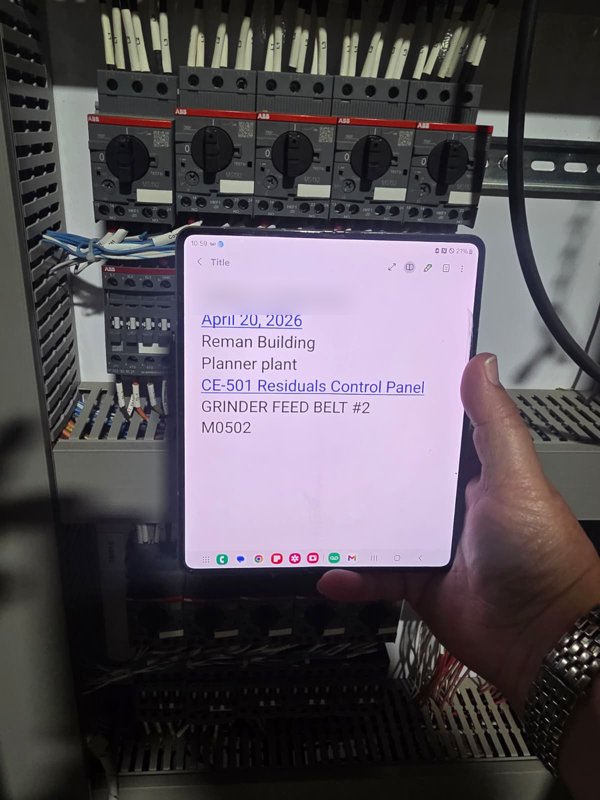 Visual
Real findings
Real findings from our scans
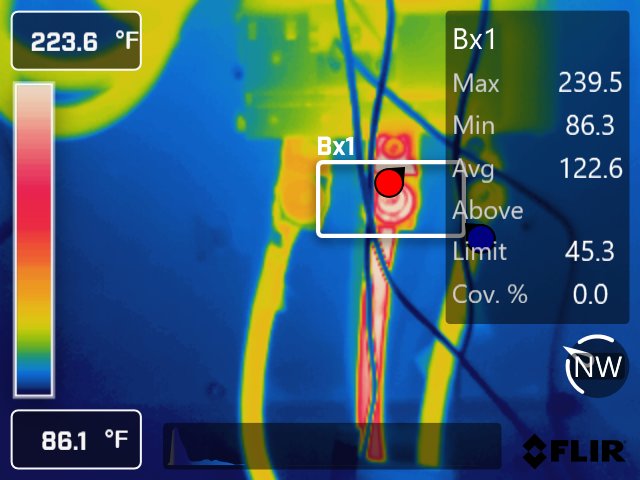
Overheated connection 239.5 °F max 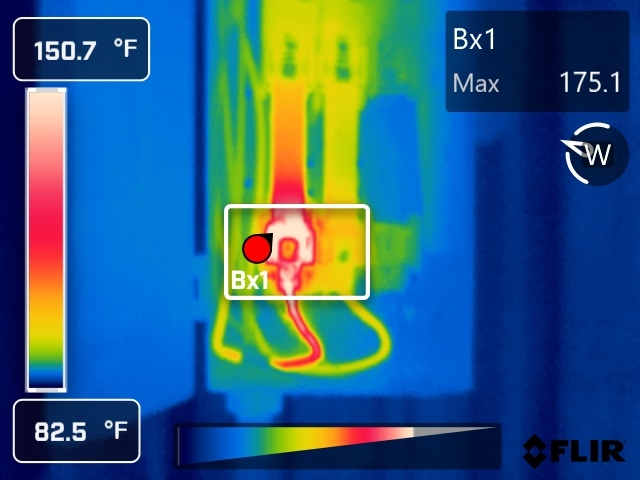
Hot terminal connection 175.1 °F max 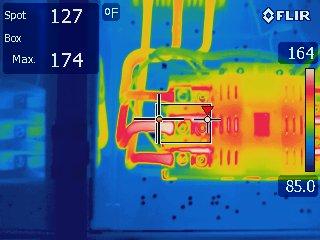
Hot terminal connections 174 °F max 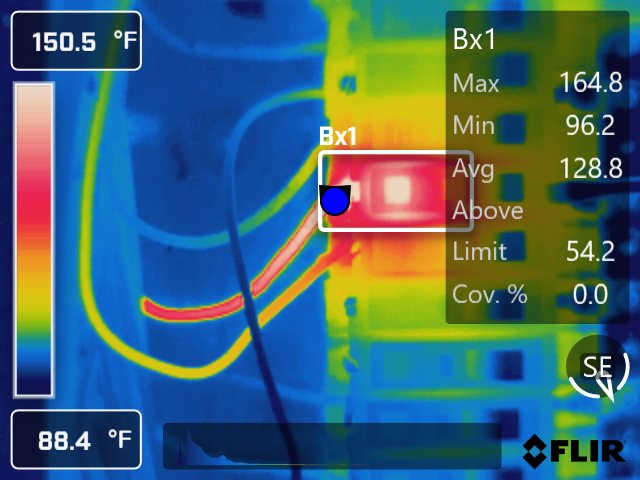
Hot breaker and conductor 164.8 °F max 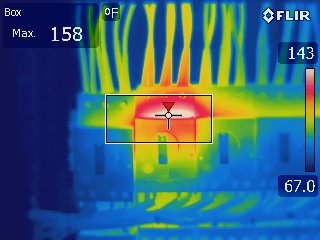
Hot spot across connections 158 °F max 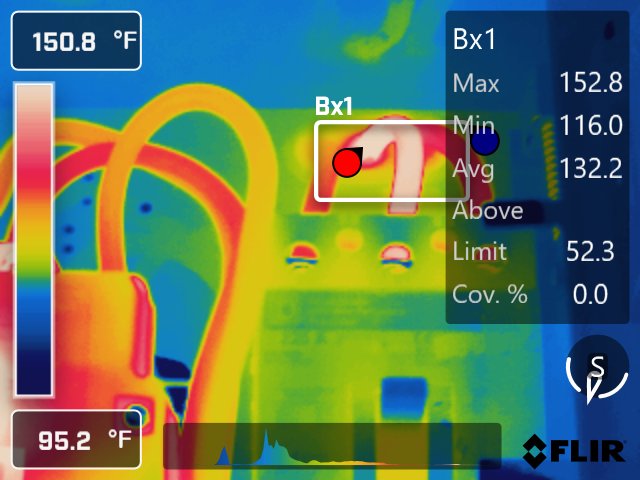
Hot conductor connection 152.8 °F max 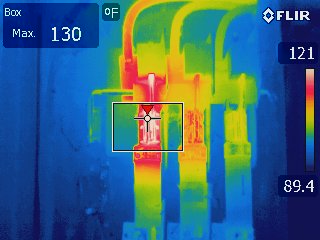
One phase hotter than the rest 130 °F max 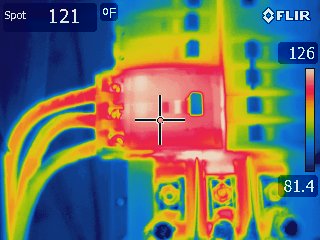
Hot breaker and lugs 121 °F spot 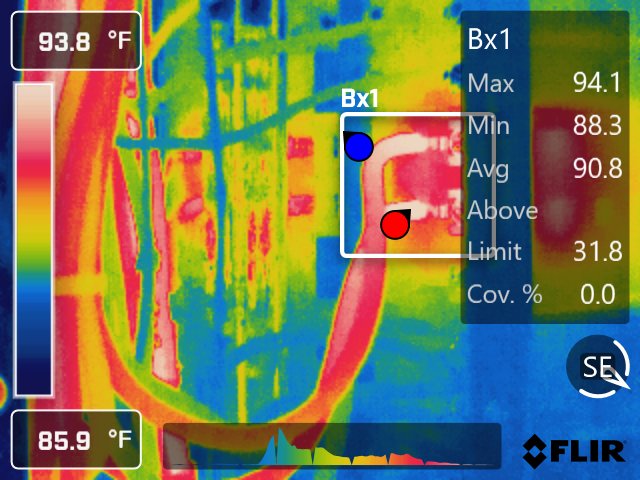
Warm conductor connection 94.1 °F max
What we scan
Switchgear, panels, MCCs, transformers and more
The following electrical distribution equipment should be inspected via infrared electrical inspection:
- Electrical utility substations, transformers and feeder poles
- Main electrical incoming services, transformers, capacitor banks, etc.
- Main electrical switchboards and disconnects
- Main electrical distribution panels and disconnects
- Uninterruptible electrical power supplies (UPS)
- Generator controls and transfer switches
- Main I-Line electrical panels
- Lighting and receptacle electrical panels
- Motor Control Centers (MCCs)
- Service electrical disconnects for motors
- Bus ducts
What a scan finds
- Loose or deteriorated connections
- Overloads
- Imbalanced loads
- Faulty breakers and fuses
- Damaged switchgear
- Internal component faults
Standards & insurance
Annual infrared is now the standard
- NFPA 70B (2023): from recommended to required. The 2023 edition turned NFPA 70B from a recommended practice into a standard. It calls for a documented electrical maintenance program (EMP) and infrared thermography of electrical equipment at intervals of no more than 12 months, and more often for equipment in poor condition.
- Insurance-required IR surveys. Property insurers and loss-control engineers often ask for a current infrared electrical survey; FM Global's Data Sheet 5-20 (Electrical Testing) is one example. Send us your carrier's recommendation with your request and we'll quote to it.
- Supports NFPA 70E safety programs. Finding failing components early means fewer surprises for the people who work on your equipment.
- Independent and unbiased. As a third party inspection service, we have no financial interest in product manufacturers, suppliers or installers.
How it works
No shutdown. No interruption.
Tell us about your facility.
Location, the equipment to be scanned, and any insurance or NFPA 70B deadline you're working to.
We scan under normal load.
Infrared testing is non-contact, so your plant, hotel or hospital keeps running while we work.
Every problem is documented.
Each hot spot is captured with a thermal image so your electrician can go straight to it.
You get the report.
Your "must-have" management tool, ready for your maintenance team and your insurance carrier.
Why make it part of your preventive maintenance program
- Quickly pinpoints electrical systems problems
- Reduces downtime and electrical equipment damage
- Prevents catastrophic and costly system failures
- Allows engineers and facility managers to establish repair priorities
- Drastically improves preventive maintenance efficiency
- Can be tested under load to avoid costly system shutdowns
The report
Your "must-have" management tool
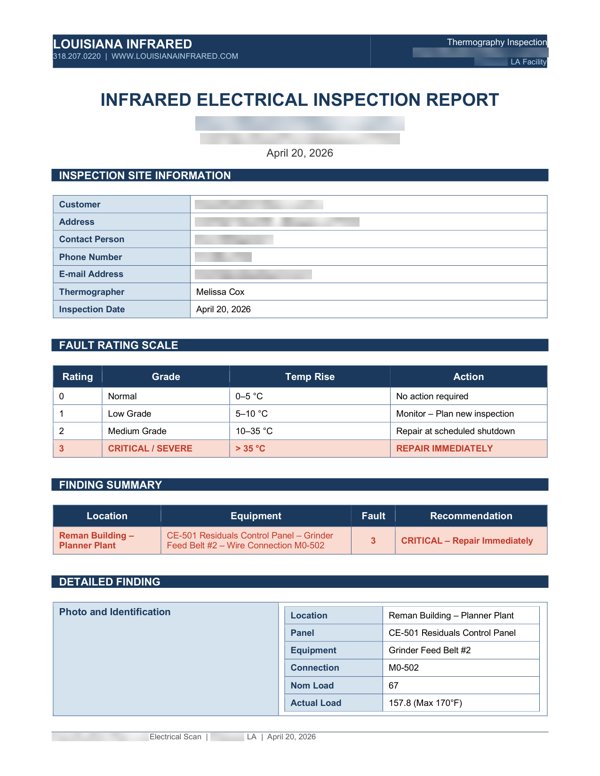
The Infrared Electrical Inspection report is your "must-have" management tool, which documents all electrical problems found, and a complete condition inventory of all items inspected during the infrared electrical systems surveys or inspections.
It allows engineers and facility managers to establish repair priorities, and gives your insurance carrier the documentation it asks for.
Industries we serve
Facilities that can't afford an outage
Manufacturing plants
Switchgear, MCCs and production power, scanned under load without stopping the line.
Hotels & casinos
Main services, distribution panels and back-of-house equipment.
Hospitals
Normal and emergency power: transfer switches, generator controls, UPS and distribution.
Data centers
UPS systems, bus ducts and switchgear, where downtime isn't an option.
Warehouses & distribution
Incoming services, panels and motor disconnects across large buildings.
Maritime & offshore
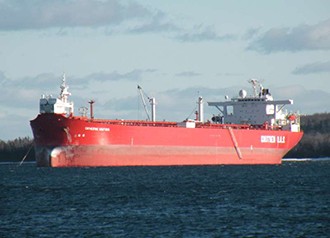
We also go offshore for electrical and mechanical inspections on shipping vessels and rigs.
Infrared electrical inspection sample
Seemingly safe. Stressed underneath.
Fortunately, this company's insurance underwriter insisted on an infrared electrical inspection prior to issuing the policy. It's a good thing they did. The infrared image at the top of this page shows a severely overheated connection; it will eventually fail.
Infrared electrical inspections performed per insurance company recommendations can detect and document incipient failures and should be combined with timely, effective repairs.
Experience
Woman-owned. Level II certified. 24 years.
- 24
- years in business
- Level II
- certified thermographers
- $5M
- general liability coverage
- Woman-owned
- small business based in Louisiana
Clients
We do more than just take pretty pictures. We deliver quality thermal imaging data to clients like these:
- NASA Michoud Assembly Facility
- Temple-Inland
- Vanguard Contractors
- Army Corps of Engineers
- State of Louisiana
- Lockheed Martin
- Jacobs Engineering
- Brice Building Contractors
- City of New Orleans
- GAF Materials Corporation
- Sterling Properties (various shopping centers)
- United States Postal Service
- Yellow/Roadway Transportation
- Wal-Mart
- Capital One Bank
- Dillard University (entire campus)
- Big Lots
- Winn-Dixie
- Conco Foods
- Marriott Hotels
- The Garland Company
- Soprema Roof Systems
- Schumpert Health Systems
- Ochsner Hospitals
- INO Therapeutics
- CentiMark Roof Systems
- Siplast Roof Systems
- Johns Manville Roof Systems
- Ben E. Keith Foods (various locations)
- Northwest Louisiana War Veterans Home
- Walton Construction
- Ed Williams Roof Consultants LLC
- Killian Company (Reno, NV)
- Arkansas Women's Medical Center
- Multiple casinos and truck stops
- Le Blanc and Young Architects
- First Baptist Church of New Orleans
- Carl E. Woodward Contractors
- Caddo Parish School Boards
- Jefferson and Orleans Parish School Board
- Lincoln Parish School Board
- Lonoke, Arkansas Community Center
- Kiper Architects
- Mark Prevot Design
- GEO Group
- Multiple supertankers and marine vessels
Service area
Based in Louisiana. Working nationwide and internationally.
Conveniently located in Bossier City, just south of Shreveport, Louisiana, we have the ability to go anywhere you need us, as soon as you need us there. We travel nationwide and international.
Also available
- Infrared roof moisture surveys (roof scanning site)
- Mechanical and rotating equipment inspections
- New construction and remodel electrical scans: make sure you are getting what you pay for
Schedule your infrared electrical scan
Thank you for your interest in Louisiana Infrared. We welcome your inquiry about infrared electrical systems surveys, infrared electrical inspection or infrared electrical testing services.
Call 318.207.0220- Emailmelissa@louisianainfrared.com
- Text318.207.0220
- Based inBossier City, Louisiana · serving nationwide & internationally